 HW Legal
Transferring a flat? Defining it correctly in the contract is crucial, and mistakes are expensive: a faulty definition of the unit leads to the registration application being rejected and the 2,000 CZK administrative fee (as of 2024) being "lost". That is because the administrative fee is tied to a specific set of proceedings. On top of that, the whole transfer process is slowed down and made more complicated. So how do you define a flat correctly in the contract?
The key question is whether the flat is defined under the Act on Ownership of Flats or under the Civil Code. How do you find out?
You can find this out from the title deed (the LV, "list vlastnictví") on which the unit is registered, or by looking it up in the publicly accessible "Land Registry online viewer" (Nahlížení do katastru nemovitostí).
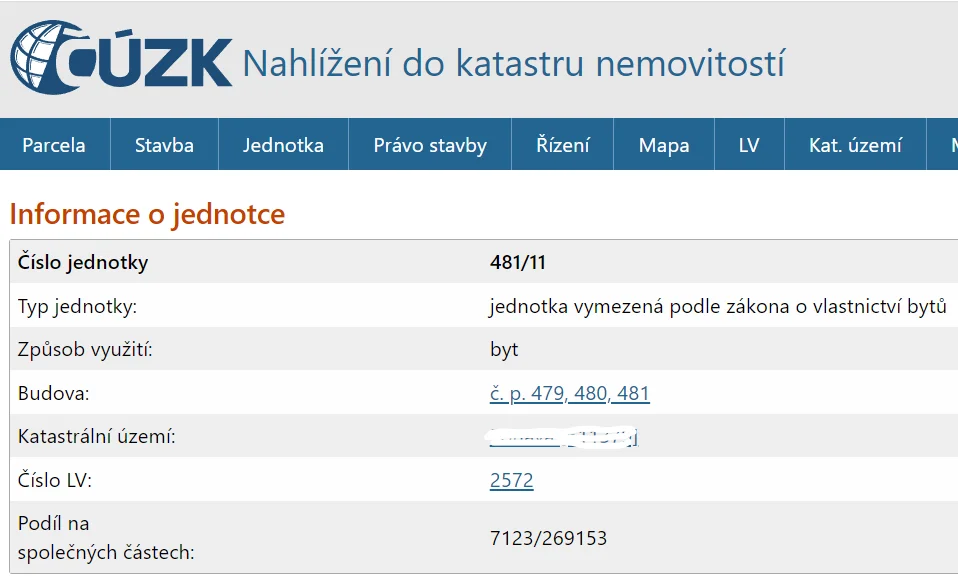
Figure 1: A unit defined under the Act on Ownership of Flats
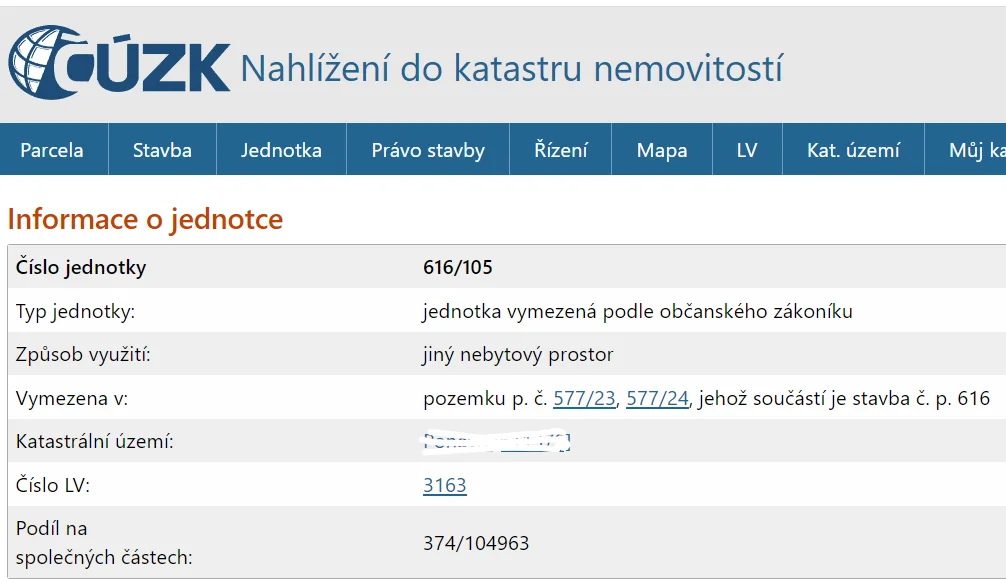
Figure 2: A unit defined under the Civil Code
A unit defined under the Act on Ownership of Flats
These days, units are already defined under the Civil Code. Even so, there are still plenty of units defined "the old way" under the Act on Ownership of Flats.
Template wording for transferring a unit under the Act on Ownership of Flats:
"unit no. [… (building no. / unit no.)], defined under the Act on Ownership of Flats, type of use [flat / other non-residential space], located on the [… above-ground floor] in building no. […] standing on plot no. (parc. č.) […], registered on title deed (LV) no. […] for cadastral area (k. ú.) […], municipality […];
to which unit there belongs a co-ownership share of id. […] in the common parts of building no. […], a residential building, standing on plot no. […] in cadastral area […], municipality […];
and a share of id. […] in plot no. […], built-up area and courtyard, registered on title deed (LV) no. […] for cadastral area […], municipality […]"
The definition of a unit under the Act on Ownership of Flats must include:
- the identification of the plot on which the building stands, the building's registration number, the cadastral area, the municipality, and, where applicable, the district;
- the type of unit (residential / non-residential);
- we also recommend stating the unit's location in the building (the floor);
- the size of the co-ownership share in the common parts of the building;
- the land under the building is usually transferred as well, so this land has to be specified and the size of the share in it stated.
The Act on Ownership of Flats (ZVB) is built around three objects of ownership:
- the "unit",
- the "co-ownership share in the common parts of the building", and
- the "co-ownership share in the land".
The unit and the co-ownership share in the common parts of the building are inseparably linked: under the ZVB, the co-ownership share in the common parts passes to the acquirer of the unit automatically.
The co-ownership share in the land, by contrast, is relatively independent: it is the land built on by the building containing the units, or land included in the owner's declaration as related land. It has to be expressly transferred together with ownership of the unit, which means that if you forget about it in the contract, the cadastre will not transfer it to the acquirer. The unit and the co-ownership share in the common parts, on the other hand, are in an accessory relationship, so that any legal act can only ever be carried out in respect of both of them together.
Tip: if you are buying a flat defined under the ZVB, check the document called the owner's declaration (Prohlášení vlastníka). It tells you whether the unit being transferred comes with, say, a cellar storage compartment that will belong to you alone. The ZVB divides the common parts of the building into "absolutely common" and "relatively common" parts: the absolutely common parts can be used by all the owners, whereas the relatively common parts are linked, as a matter of property law, to one particular unit only. The relatively common parts cannot be ascertained from the entry in the cadastre, though, so you get this information from the owner's declaration.
A unit defined under the Civil Code
The wording for a unit defined under the Civil Code (OZ) is simpler.
Template wording for transferring a unit under the Civil Code:
"unit no. […], type of use flat, defined within plot no. (parc. č.) […], of which a building with building no. […] forms part; the unit includes a co-ownership share of id. […/…] in the common parts of plot no. […], registered on title deed (LV) no. […] for cadastral area (k. ú.) […], municipality […], district […]"
As far as the requirements of the Cadastral Act are concerned, the shorter wording below would be enough:
"unit no. […], defined within plot no. […], in cadastral area […]"
The first, longer wording is nonetheless to be recommended.
Unlike the definition under the ZVB, the Civil Code simplifies things and recognises only a single object, into which all three previously separate objects are merged. This follows from the superficies principle, under which a building and the units in it are, as a rule, part of the land (or of a right to build).
The definition of a unit under the Civil Code must include:
- the unit number;
- the identification of the immovable thing within which the unit is defined: usually the land, or else the building (where the building is not part of the land or of a right to build), or a right to build. For land, you have to state at least the plot number and the cadastral area (if it is a building plot, this too has to be stated, otherwise it is presumed to be a land plot). For a building, the building registration number, the plot number, and the cadastral area. For a right to build, the number of the plot it is established over, and the cadastral area.
If the unit is still under construction, that does not prevent its transfer, but the fact that it is unfinished also has to be stated in the contract.
Finally, if you have any doubts about how to define a unit, it is worth contacting a qualified lawyer. That way you avoid the risk of the registration application being rejected because of a badly defined unit, or the risk of forgetting to transfer the share of the land under the building, for example.