 HW Legal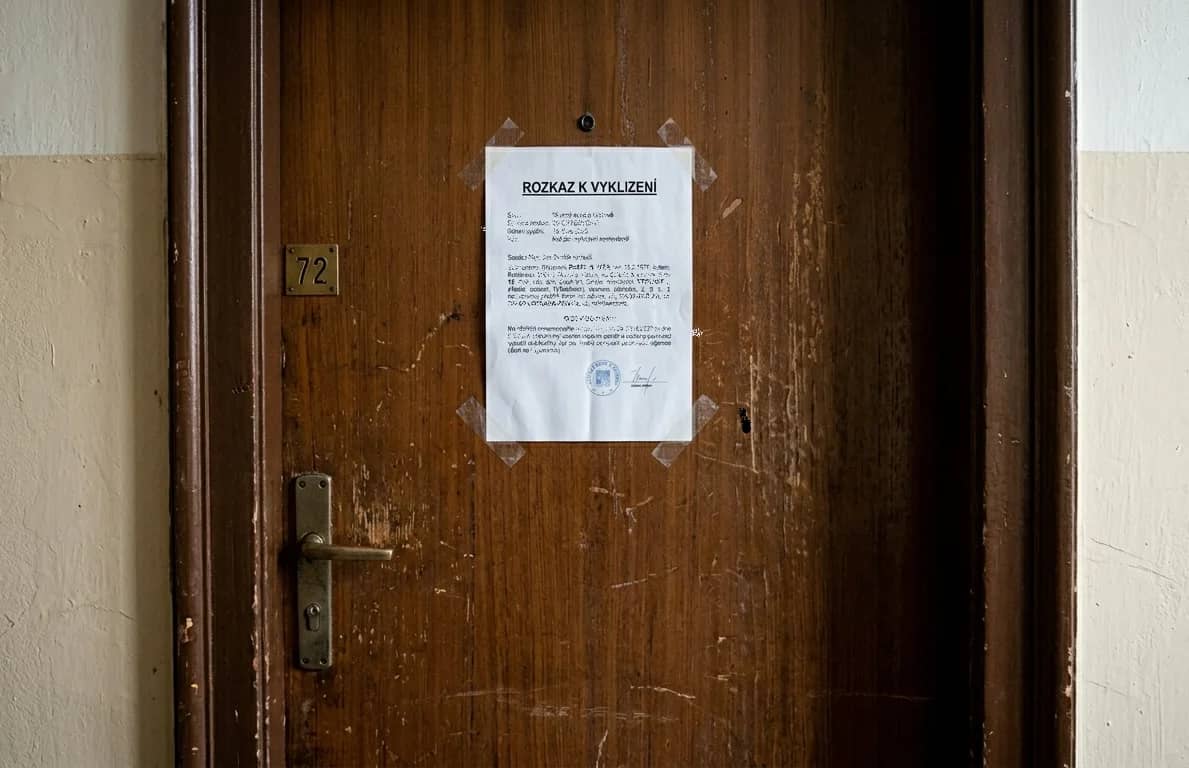
Anglická verze finální (zkrácené) podoby, bez sekce „Účinnost a legislativní vývoj", kterou jsi vypustil. Klíčová data (zákon č. 176/2025 Sb., účinnost 1. 1. 2026, § 175a) zůstávají v úvodu sekce „Jak funguje".
The Eviction Order: How Does It Compare to a Notarial Deed?
An amendment to the Code of Civil Procedure, in force since 1 January 2026, introduces a new tool known as the eviction order, designed to make clearing a property easier and faster by giving the courts a new power to issue these orders.
In this article we take a look at the eviction order, a new tool introduced by an amendment to the Code of Civil Procedure as of 1 January 2026, designed to make clearing a property easier and faster by giving the courts a new power to issue such orders. At the end we briefly consider how useful it is compared with the "reborn" notarial deeds that carry a direct enforceability clause.
How does the eviction order work?
The eviction order was introduced by an amendment to the Code of Civil Procedure passed alongside the Housing Support Act. This is Act No. 176/2025 Coll., published in the Collection of Laws on 16 June 2025 and in force since 1 January 2026. The order is now set out in the new Section 175a of the Code of Civil Procedure and makes it possible to deal with problem-tenant situations more quickly through order proceedings. Let's take a closer look at what it offers landlords.
In its design, the eviction order draws on the well-established payment order. The basic principle is a simplified court procedure with no need for a hearing, which significantly shortens the whole process. The court can issue the order after assessing the written materials the landlord submits, provided all the conditions laid down by law are met.
To have an eviction order issued successfully, a landlord has to prove several key things:
- establish their ownership of the property in question,
- show that the tenancy has ended,
- provide a written demand to vacate, with provable delivery at least 14 days before filing the application.
Protecting tenants' rights during eviction
The rules also keep tenants' rights in mind. An order cannot be issued while the two-month period for applying for a review of whether the notice to quit was justified is still running, or where such an application has not yet been finally decided.
On the procedural side, tenants are protected by the option to file an objection against the order within 15 days of its delivery. Filing an objection automatically cancels the order, and the case carries on along the standard route, with a hearing and the taking of evidence. This safeguard ensures that in more complex cases, or where the facts are in dispute, the matter is properly heard in ordinary court proceedings.
Enforcement and clearing the property
If the tenant does not file an objection and does not voluntarily vacate the property, the eviction order becomes an enforceable title. The enforcement that follows is designed with the particulars of clearing a property in mind: the enforcement officer has to give the person being evicted fifteen days' notice of the date of clearance. The enforcement itself involves removing everyone present in the property and clearing out all movable belongings.
Conclusion: the outlook for landlords' legal protection
We have written before about how landlords can protect themselves using a notarial deed with consent to enforceability. This very practical tool becomes an enforceable title once an obligation goes unmet, so a landlord can skip lengthy court proceedings and have the property cleared more quickly by filing an enforcement application with a court enforcement officer on the basis of the enforceable notarial deed. Perhaps partly because of the earlier, temporary uncertainty about whether they could be used, these deeds are not in widespread use, and many landlords still have to go to court first to obtain a decision ordering the tenant to vacate.
For these landlords and others, the notarial deed with consent to enforceability therefore remains, for now and probably into the future, an effective legal tool for heading off long court battles and stopping a non-paying tenant from blocking up their property. The current case law of the Supreme Court provides the legal certainty needed to use it in practice. With the eviction order now in force since January 2026, landlords who don't use a notarial deed for one reason or another can expect a stronger legal position too. Just how great the benefits turn out to be, though, will depend on how precisely the eviction order is anchored in law, and on how effectively the courts can assess the applications put before them and issue orders without unnecessary delay.
If you are dealing with a tenant who isn't paying rent or refuses to leave your property, don't hesitate to get in touch with us. We will be glad to help you find the most suitable solution and protect your rights effectively.